Are Refillable Hotel Amenities Hygienic? The Science
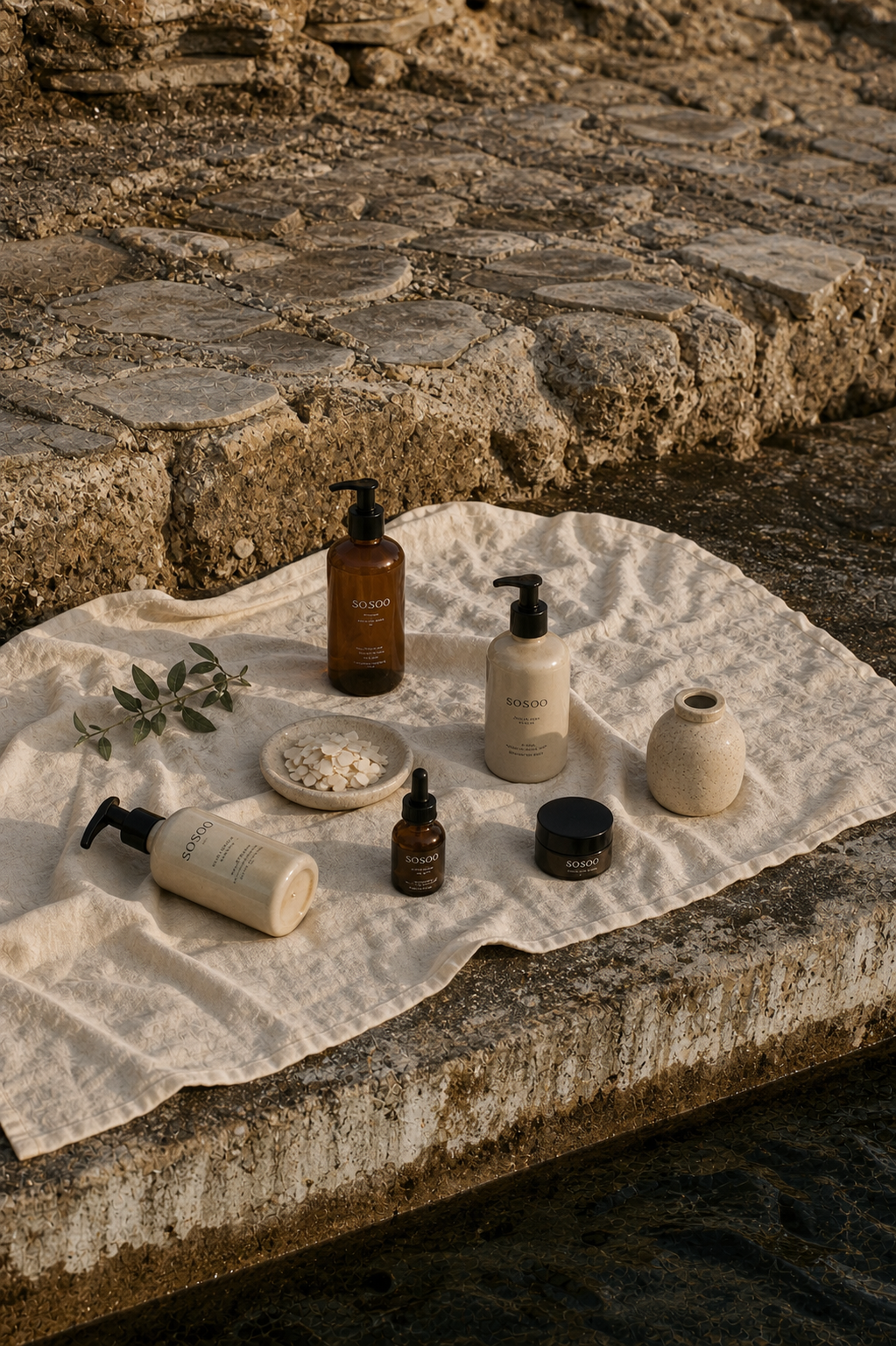
Executive Summary Refillable hotel amenities are hygienic when two conditions are met: the formulation inside the vessel passes a validated preservative efficacy test under ISO 11930, and the vessel is managed through a documented back-of-house protocol with tamper-evident closures between guest stays. The anxiety around refillable systems is almost entirely a product of bad implementation, not an inherent property of the format. This article explains the science, the operational design, and the emerging guest expectation for transparent standards, so hotel operators can make a confident and fully informed decision.
It is one of the most common concerns raised by hotel guests and procurement managers alike. A refillable bathroom amenity system sounds sustainable in principle. But in practice, the question follows immediately: who refilled it, when was it cleaned, and is what is inside it actually safe to use?
The concern is not irrational. A poorly designed refillable system, a bulk plastic dispenser topped up by housekeeping from an unlabelled container, with no sterilisation protocol and no tamper evidence, does carry legitimate hygiene risks. Guests who feel uncomfortable with that format are responding to a real problem.
But the science behind a properly designed refillable amenity programme tells a very different story. The anxiety around refillable systems is almost entirely a product of bad implementation, not an inherent property of the format itself. Understanding the difference matters, both for guests evaluating their experience and for hotel operators making procurement decisions.
The Real Operational Challenges Hotels Are Facing
Before addressing the science, it is worth acknowledging what the industry has already learned from early implementation. The transition to refillable systems has produced genuine complications alongside its benefits, and understanding them honestly is the starting point for solving them properly.
Single-use miniatures carry an emotional value that refillable systems do not automatically replace. For many guests, the small bottled amenity is part of the hotel experience, a tactile souvenir that extends the memory of the stay. Hotels that have made the switch report that some guests genuinely miss this, and guest complaints about shared dispensers are not uncommon. The feeling of using a container that others have previously used creates discomfort that no amount of signage fully resolves.
Theft presents a more tangible operational problem. Hotel operators report that guests decant product from dispensers into their own empty containers, a behaviour that was rare with sealed miniatures. The industry response has been pragmatic but imperfect: locking mechanisms, caps sealed with adhesive, or purpose-built non-opening vessels. Each solution introduces new complications. A permanently sealed vessel cannot be inspected for contamination. Consumption becomes harder to track. Residue in spent vessels creates waste that undermines the sustainability argument the format was intended to support.
The loss rate from poorly designed refillable systems can be substantial. And the genuine environmental credentials of bulk dispenser formats remain debatable when the full lifecycle, including product waste, vessel end-of-life, and cleaning chemical consumption, is properly accounted for.
The honest conclusion from the industry's early experience is this: switching from single-use plastic to a refillable dispenser does not automatically produce a better outcome, environmentally, operationally, or experientially. The format change is necessary. The format alone is not sufficient. What determines whether the transition succeeds is the quality of the vessel, the design of the operational protocol, and the formulation inside it.
What Cosmetic Safety Regulation Actually Requires
Every cosmetic product placed in a hotel bathroom and supplied to an EU market must comply with EU Cosmetic Regulation EC No 1223/2009. This is not a voluntary standard. It is a legal requirement that applies to every product regardless of format, whether single-use miniature or refillable vessel.
Compliance requires a full safety assessment conducted by a qualified cosmetic safety assessor, a product information file documenting every ingredient and its concentration, and critically, a preservative efficacy test.
The preservative efficacy test, formally known as the challenge test under ISO 11930, is the specific mechanism that addresses the hygiene concern directly. The finished product is deliberately inoculated with five specific microorganisms, including bacteria, yeast, and mould, at controlled concentrations. The product is then monitored over a defined period to verify that the preservative system reduces and controls microbial growth to specified limits.
In practical terms, this means that a properly formulated cosmetic product is already designed to handle contamination introduced during normal use. A guest using a pump or touching the product does not compromise its safety. The preservative system is specifically validated to manage exactly that scenario.
This applies equally to a single-use miniature and a refillable vessel. The product inside does not become less safe because the container is permanent. It is the formulation that determines safety, not the packaging format.
The Role of the Vessel in Managing Perceived Risk
While the formulation addresses the scientific reality of hygiene, the vessel design addresses the guest's perceived reality. Both matter. A guest who cannot see evidence of cleanliness and care will remain anxious regardless of what the safety dossier says.
This is where vessel design becomes a hygiene communication tool as much as an aesthetic one.
Tamper-evident closures are the most direct solution. A pump or closure that incorporates a visible seal, replaced by housekeeping between guest stays, allows the guest to confirm visually that the vessel has not been accessed since it was last serviced. This single feature removes the primary source of anxiety. The guest does not need to understand preservative chemistry to feel confident. They need to see evidence of a controlled process.
Sealed apothecary formats remove the concern entirely for properties where operational simplicity is a priority. Each vessel contains a single-stay quantity of product and is sealed before placement in the room. The guest opens a sealed product. There is no refilling, no shared container, and no ambiguity about what has happened to the product before their arrival. The vessel itself is reusable across many stays, even though the product inside is fresh each time.
Opaque or dark vessel materials prevent guests from seeing the product level inside the container, removing a secondary source of discomfort. A partially depleted transparent bottle raises questions about previous use. A ceramic or frosted glass vessel communicates nothing about the product level and everything about the design intention of the programme.
Vessel design also directly addresses the theft and decanting problem. A well-designed vessel with a tamper-evident or non-removable closure removes the opportunity for guests to decant product, without creating the contamination risk of a permanently sealed, unserviceable container.
The Back-of-House Protocol and the Labour Question
The refill process itself is where operational design matters most. The guest's concern about how and when the product was refilled is legitimate when the process is invisible and uncontrolled. It becomes irrelevant when the process is documented, consistent, and kept entirely out of the guest space.
A properly managed refill protocol works as follows. Vessels are removed from the room during the housekeeping service, not topped up in place. Refilling takes place in a designated back-of-house area using labelled, sealed bulk containers sourced directly from the amenity supplier. The pump or closure is replaced or sanitised as part of the process. The vessel is returned to the room sealed and presented as a clean object. The guest never sees a bulk container. They only ever encounter the finished vessel, clean and sealed, in the same way they encounter a freshly laundered towel or a restocked minibar.
Any change to housekeeping procedure raises an immediate question about labour cost, and it is a legitimate one. A refill protocol that adds meaningful time to each room service cycle has a real budgetary implication.
The honest answer is that the labour impact depends entirely on how the system is designed. A poorly positioned refill station with no standardised process does add time. A well-designed one, with floor-level refill points, clear protocols, and vessels engineered for fast and clean refilling, adds approximately one to two minutes per room on changeover days only.
The comparison that is rarely made is this: single-use miniatures carry their own hidden labour cost. Every room requires a full set replacement on every service day regardless of consumption. Partially used bottles are discarded. Full sets are unwrapped, arranged, and restocked daily. In a hotel running at high occupancy with average stays of two to three nights, this daily restocking cycle represents significant cumulative labour across a season.
A permanent vessel system serviced only on guest changeover reduces the frequency of amenity intervention by roughly two thirds compared to daily miniature restocking. When that calculation is applied across a full season, the labour argument frequently inverts. The refillable system costs less in staff time, not more.
The key is designing the operational workflow before launch rather than adapting to it after. SOSOO provides a full housekeeping integration guide with every programme, covering refill station positioning, vessel handling, and changeover protocols.
The Emerging Expectation: Transparent Standards, Not Just Safe Ones
A growing body of guest feedback and industry commentary is raising a demand that goes beyond safety compliance. The question is no longer only whether a refillable system is hygienic. It is whether the property can demonstrate and communicate how it is managed.
This expectation is particularly visible in Asian markets, where consumer scrutiny of cosmetic safety and hygiene protocols is significantly more advanced than in Europe. As Asian travellers represent an increasingly important demographic for Balearic luxury properties, their standards are becoming the reference point rather than the exception. The expectation is not simply that the product is safe. It is that the property can show how it knows the product is safe.
For hotel operators, this means that a documented refill protocol kept in a housekeeping manual is no longer sufficient on its own. Properties that communicate their standards visibly, whether through a small card in the bathroom explaining the vessel management process, a note in the digital guest compendium, or a sustainability page on the hotel website, will meet this expectation directly. Those that do not leave guests to draw their own conclusions, which in the absence of information tend toward scepticism.
SOSOO provides every partner property with a guest-facing communication template alongside the operational refill protocol. The standard is not only met. It is made visible.
Comparing the Actual Risk: Refillable Versus Single-Use
It is worth examining the hygiene assumption embedded in the preference for single-use miniatures. The logic is that a sealed, factory-filled bottle is inherently safer than a refillable vessel because it has not been opened or handled since production.
This logic holds for the first guest. It does not hold for the supply chain that precedes them.
Single-use miniatures are produced in bulk, warehoused, transported, stored in hotel supply rooms, and handled multiple times before reaching a bathroom shelf. The sealed closure protects the product during this process. But so does a tamper-evident closure on a refillable vessel. Product safety in both cases is determined by the formulation and the integrity of the closure, not by whether the container is designed for single or multiple use.
Once opened, a miniature bottle used across multiple bathroom visits by the same guest is exposed to exactly the same environmental factors as a refillable vessel. The preservative system in both cases is what maintains safety throughout the open use period. The format is irrelevant to the chemistry.
What This Means in Practice
For hotel operators evaluating a transition away from single-use miniatures, the hygiene concern is addressable through three concrete decisions:
Selecting a supplier whose products carry full EU compliance documentation including preservative challenge test results under ISO 11930
Specifying vessel formats with tamper-evident closures or sealed per-stay formats that address both guest perception and the theft and decanting problem
Implementing a documented back-of-house refill protocol designed before launch, not improvised after
None of these decisions are complex. All of them transform a theoretical hygiene concern into a demonstrably managed one.
The refillable amenity programme done well is not a compromise on safety. It is an upgrade on every dimension that matters: formulation quality, brand identity, environmental responsibility, labour efficiency, and the confidence that comes from knowing exactly what is in the bottle and why.
Contact SOSOO Amenities to discuss a programme for your property.
Frequently Asked Questions
Are refillable hotel amenities actually hygienic? Yes, when the formulation passes a validated preservative challenge test under ISO 11930, and the vessel is managed through a documented back-of-house protocol with tamper-evident closures replaced between guest stays. EU Cosmetic Regulation EC No 1223/2009 requires this safety infrastructure for all compliant products regardless of format. The hygiene concern with refillable systems is almost entirely a product of poor implementation rather than an inherent problem with the format.
What is the ISO 11930 challenge test and why does it matter for hotel amenities? ISO 11930 is the international standard for preservative efficacy testing in cosmetic products. The test deliberately introduces five specific microorganisms, including bacteria, yeast, and mould, into the finished product at controlled concentrations, then measures whether the preservative system controls microbial growth to safe limits. A product that passes this test is validated to handle the contamination introduced during normal guest use. Any EU-compliant cosmetic product supplied for hotel use must have this documentation.
Do refillable dispensers create extra work and cost for housekeeping? Not necessarily, and in many cases the opposite is true. Single-use miniatures require full restocking on every service day regardless of consumption. A well-designed refillable system requires attention only on guest changeover days. The net labour impact depends on how the operational workflow is designed before launch. Over a full season with average stays of two to three nights, the cumulative labour advantage frequently sits with the refillable system.
Why do some guests still prefer single-use miniatures? Several legitimate reasons. Single-use miniatures feel exclusively theirs, unopened and untouched by previous guests. Some guests collect them as souvenirs. The sealed format provides an immediate visual hygiene signal. These preferences are real and should inform how a refillable programme is designed and communicated, rather than being dismissed. A tamper-evident vessel with a guest-facing explanation of the refill protocol addresses most of the underlying concern directly.
What documentation should a hotel request from an amenity supplier before switching to a refillable system? Request the safety assessment, product information file, preservative challenge test results under ISO 11930, and EU Responsible Person documentation for every product in the collection. Also request the supplier's recommended back-of-house refill protocol and any guest-facing communication materials. A serious supplier provides all of this without hesitation. SOSOO makes full compliance documentation available to all partner properties.
SOSOO Amenities develops bespoke guest amenity collections for luxury hotels, boutique properties, spas, and superyachts. Every programme includes full EU compliance documentation, a housekeeping integration guide, and a guest-facing communication template. Based in Palma, Mallorca, with formulation expertise developed between Seoul and the Mediterranean. Contact us at cs@sosooamenities.com or visit sosooamenities.com.
Also published on LinkedIn — Read the LinkedIn version here


