Resources
Compliance, K-beauty science, and operational guides for hotel and superyacht amenity programmes.
K-beauty reads as a trend, and a trend is a weak reason to put a product in a luxury cabin. The real argument is provenance: formulations developed to a clinical standard, in the country with the most advanced applied skin science in the world.
Read →Ritz-Carlton has three vessels sailing. Four Seasons launched in 2026. Aman and Orient Express are next. Luxury hotel brands are moving onto water at scale — and they are bringing the same guest expectations with them. The amenity supply chain has not followed.
Read →For years, catalogue-based amenity supply was the right answer for charter yachts. You browse, you order, it arrives at the dock. What has changed in 2026 is not any one supplier — it is the compliance environment, the operational burden, and the guest expectations around them.
Read →A licensed retail brand on a superyacht vanity once communicated that the operator cared. Guests recognized the name and associated it with quality. The market has shifted. That same recognition now works against you.
Read →The captain signs off on the programme. The owner rarely sees it. But the chief stewardess is the one managing the stock, refilling the cabins during a four-hour turnaround, and hearing what guests say at the end of the charter. This guide is written for her.
Read →A charter yacht running a full Balearic season needs its amenity supply sorted before June. International suppliers have two-week lead times. Peak season turnarounds can be 48 hours. The provisioning math only works if the supply chain is local.
Read →Aesop, Le Labo, Acqua di Parma, Bvlgari — these brands now appear everywhere the high-end guest shops, travels, or stays. The exclusivity that justified the licence fee has largely evaporated. A practical guide to what a genuine alternative looks like in 2026.
Read →Regulation (EU) 2025/40 — known as PPWR — takes general effect in August 2026. This reference covers every obligation that affects hotel operators: Annex V prohibitions, recyclability requirements, documentation, and how EU law interacts with Balearic and Spanish national regulations.
Read →The way charter yachts have ordered amenities for twenty years follows a recognizable pattern. Browse a catalogue. Choose the brands guests will recognize. Place a seasonal order. Stack the boxes in storage. Count bottles at turnaround. It worked when the supply chain, the regulatory environment, and guest expectations were all stable. None of those things are stable anymore.
Read →A four-cabin charter yacht running ten charters a season goes through roughly 800 to 1,200 single-use plastic amenity items a year. Every one has to be logged, bagged, and offloaded. Here is what the switch to refillable actually involves — and why it is simpler than most crews expect.
Read →Most amenity suppliers design for the hotel room. A charter yacht is not a hotel room. The turnaround is faster, the conditions are harder, the storage is smaller, and the crew doing the refills are also doing ten other things. Here is what a programme that actually works in that environment looks like.
Read →Charter yachts in the Mediterranean face three things hotel amenity suppliers rarely design for: hard marina water, constant UV and salt exposure, and a compliance framework that now requires full documentation from the supplier. This guide covers all three.
Read →The EU Packaging and Packaging Waste Regulation enters general force in August 2026. For Balearic hotels, it is not even the most pressing regulation they are not complying with. This guide covers both.
Read →This is not an argument that European cosmetic formulation is bad. It is not. The question for hotel buyers is narrower: which approach produces better-performing products for intensive guest use?
Read →Most operators who add K-beauty to their amenity brief are thinking about aesthetics. The science behind the claim is rarely what drives the decision. This is a guide to the science.
Read →Switching from miniatures to a pump dispenser satisfies the format requirement under Balearic Law 8/2019. It does not automatically make your amenity system compliant. Here is what the other three requirements are.
Read →Most hotels assume their amenity supplier has handled CPNP registration. Many have not — at least not for every product in the range. Here is what the registration actually requires, and how to check.
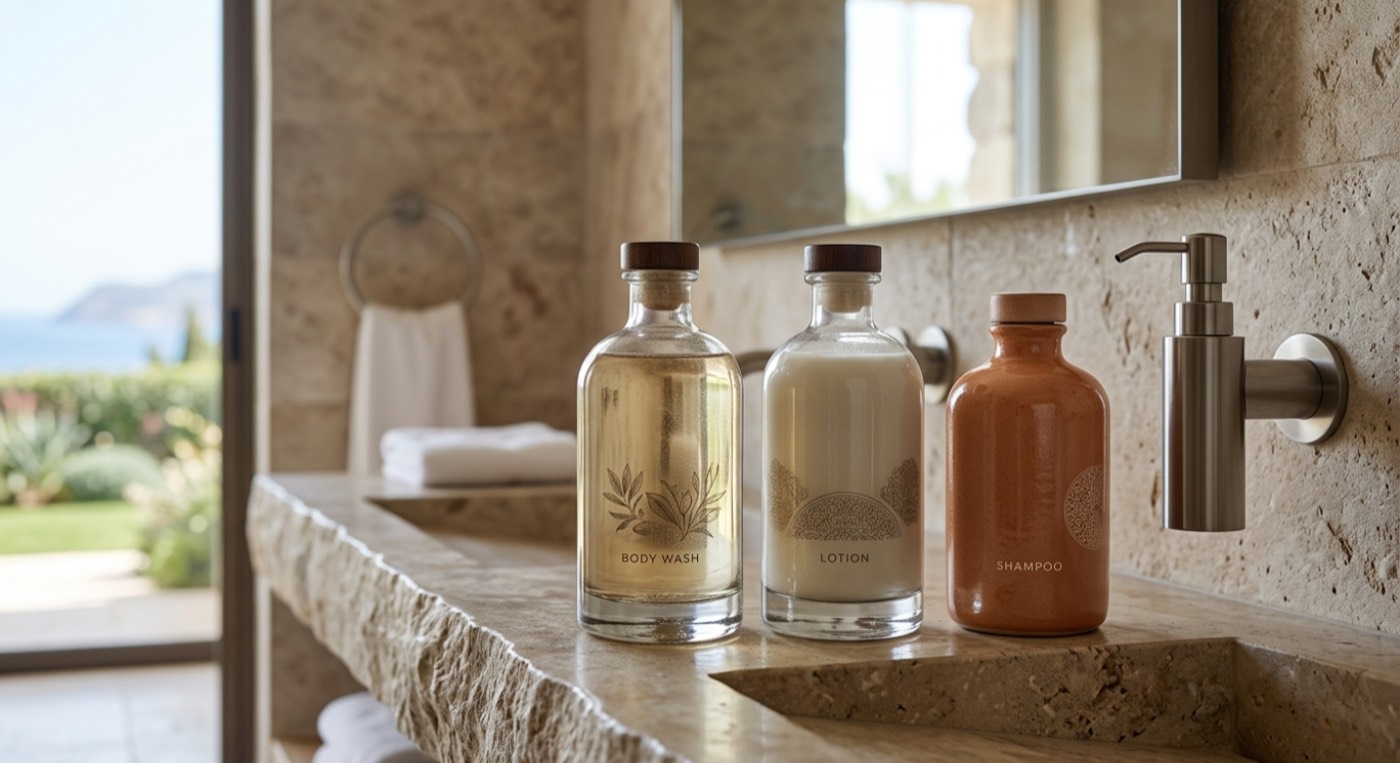
Read →Balearic Law 8/2019 is the strictest hotel amenity regulation in the EU. It predates PPWR. It predates Spain's national plastic framework. And it has been in force since 2019. If your Balearic property is still using single-use plastic miniatures, you are already non-compliant.

Read →The Spanish hotel amenity market looks more crowded than it is. There are plenty of distributors. There are very few genuine formulation partners. Knowing the difference matters more than most procurement processes acknowledge.
Read →The upfront investment in a bespoke amenity programme is higher than a single-use replacement. The total cost over a season is usually lower. And there is a retail revenue opportunity that the single-use model makes structurally impossible.
Read →Two things are happening at the same time: regulation is removing the single-use plastic option, and the licensed brand model has stopped working. The properties treating this as one decision rather than two will come out ahead.
Read →The hygiene concern around refillable dispensers is real — but it is almost entirely a problem of bad implementation, not the format itself. Here is what the science actually says.
Read →Aesop stopped being a luxury signal when it hit every airport duty-free. The guest most likely to stay in your hotel already owns it. You're paying a licence premium for a product that no longer impresses them.
Read →Most amenity suppliers have never designed for a marine environment. These are the five questions that separate a genuine partner from someone who will send you hotel-spec miniatures in a different box.
Read →Switching to a generic refillable dispenser is compliance. It is not a brand decision. The two requirements — regulatory and experiential — can be solved with the same programme.
Read →Most hotels in the Balearics are already non-compliant — and don't know it. The plastic ban came before any national or EU deadline. Here's the full picture.
Read →