SOSOO Amenities — Resources
Running an Amenity Programme on a Charter Yacht: What Actually Works
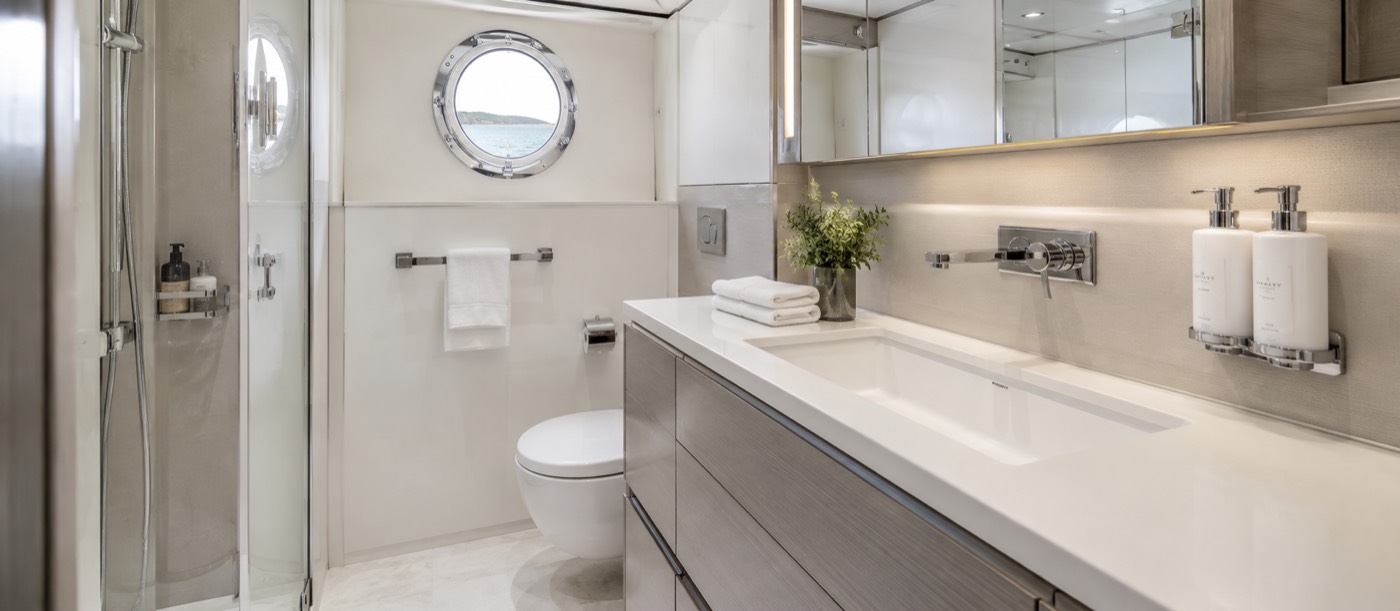
Most amenity suppliers design for the hotel room. A charter yacht is not a hotel room.
The turnaround between charters is faster — sometimes same-day, rarely more than 48 hours. The crew doing the refills are also cleaning, cooking, preparing for guests, and managing a hundred other things. Storage is limited. The products that end up in the guest bathrooms need to have been in the right place at the right time, in the right quantity, refilled without drama.
The suppliers who have never been on a working charter yacht often discover this the hard way — through crew feedback at the end of the first season.
The turnaround problem
On a hotel, turnaround happens daily but at a predictable pace. On a charter yacht, a full turnaround — cleaning every cabin, restocking every bathroom, laundering everything, provisioning the galley — might happen four times in a week during peak season, or once every two weeks in low season.
Each turnaround is also shorter than it looks. A professional crew on a 40–50 metre vessel typically has a window of four to eight hours to turn the boat. Amenity restocking needs to fit inside that window without becoming its own project.
A programme that requires the chief stewardess to count bottles, estimate usage, log a reorder, and then wait for delivery has failed before it started. The programme needs to work with the turnaround, not against it.
What crew actually need from an amenity system
They need to know what is installed and what is running low without counting every bottle. Live stock visibility by cabin or zone — how many units installed, how many refills remaining before the next reorder — removes the guesswork that turns a routine turnaround into a scramble.
They need reorders to happen before they become urgent. An amenity system that connects stock levels to occupancy patterns and flags the reorder window before the boat runs dry is the difference between one email to the supplier and an emergency call from a marina in Ibiza.
They need the refill process to take minutes, not an hour. The physical refill action — removing a vessel, refilling from bulk, reseating and returning — should be fast, clean, and not require a manual. Well-designed dispensing systems with clear fill lines and tamper-evident closures make this a two-minute cabin task rather than a production.
They need products that still perform after three days at sea. Salt, hard water, and constant UV change how products feel by day three of a charter. A shampoo that feels good on day one but leaves hair straw-like after a long day offshore is a crew complaint waiting to happen, often relayed through the guest debrief.
The stock management reality
Most charter yachts are still managing amenity stock in a shared notes app or a WhatsApp message to the provisioner. "We're running low on body wash, need 12 units" — sent when the bottle under the sink runs out during a turnaround.
This is reactive, error-prone, and entirely predictable. A vessel with four cabins running a ten-charter season needs roughly the same amount of product every season. The variance is occupancy and charter length. Neither is unknown.
The SOSOO Operating System was built specifically for this operational layer. Installed bottle count per cabin, refill logs, stock cover, and a reorder forecast based on the next block of charter bookings. Most crews who run it for one season will not go back to the WhatsApp method.
What happens when the programme is right
When the amenity programme is genuinely built for the boat — the right products, the right quantities, the right refill system, the right stock visibility — it disappears from the crew's workload in the best possible way.
The chief stewardess is not thinking about body wash during turnaround. The captain is not fielding a provisioning call at 07:00 because the previous charter used more than expected. The guest finds the bathroom right every time.
And occasionally, a guest mentions the scent in the debrief. Not because crew pointed it out, but because it was specific enough to notice. That is when you know the programme is working.
What to ask a charter yacht amenity supplier
A supplier who understands the charter context will answer these questions without hesitation.
How does your system handle stock tracking across a season with variable occupancy? If the answer is "we can provide a spreadsheet template," the system is not built for a working boat.
What is the physical refill process for your dispensing systems? It should take under three minutes per cabin and require no tools. If the demo involves anything more complicated than that, it will not survive the first peak-season turnaround.
How do your formulations perform after salt exposure and repeated rinsing over a multi-day charter? Ask for data or a reference from a vessel that ran the programme in the Mediterranean for a full season, not just a product sheet.
What is your lead time for reorders to a Balearic or Mediterranean marina? Delays in supply chain are a charter-season problem that cannot be solved with goodwill. Spain-based operations mean local lead times, not international freight.
Start a brief for your vessel →
FAQ
How much extra work does a refillable amenity programme add for crew? In a well-designed system, the marginal time per turnaround is two to three minutes per cabin. Most crews report a net reduction in time once the tracking system removes the guessing.
What is the right stock buffer to hold on a charter yacht? Enough to cover the next two charters plus a 20% margin. The SOSOO Operating System calculates this from actual occupancy rather than a flat estimate.
How do we manage amenities across multiple vessels in a charter fleet? Fleet visibility — all vessels, all cabin counts, all stock levels in one view — is part of the SOSOO Operating System. See how it works for charter fleets.
Do charter yachts need to comply with PPWR and Balearic Law 8/2019? Yes, if the vessel operates commercially in EU waters. Vessels in the Balearics are subject to Law 8/2019, which has been in force since 2019. Full compliance guide for charter vessels.
Get in touch
cs@sosooamenities.com →