SOSOO Amenities — Resources
The Hotel Standard Has Gone to Sea — and Nobody Is Talking About the Amenity Gap
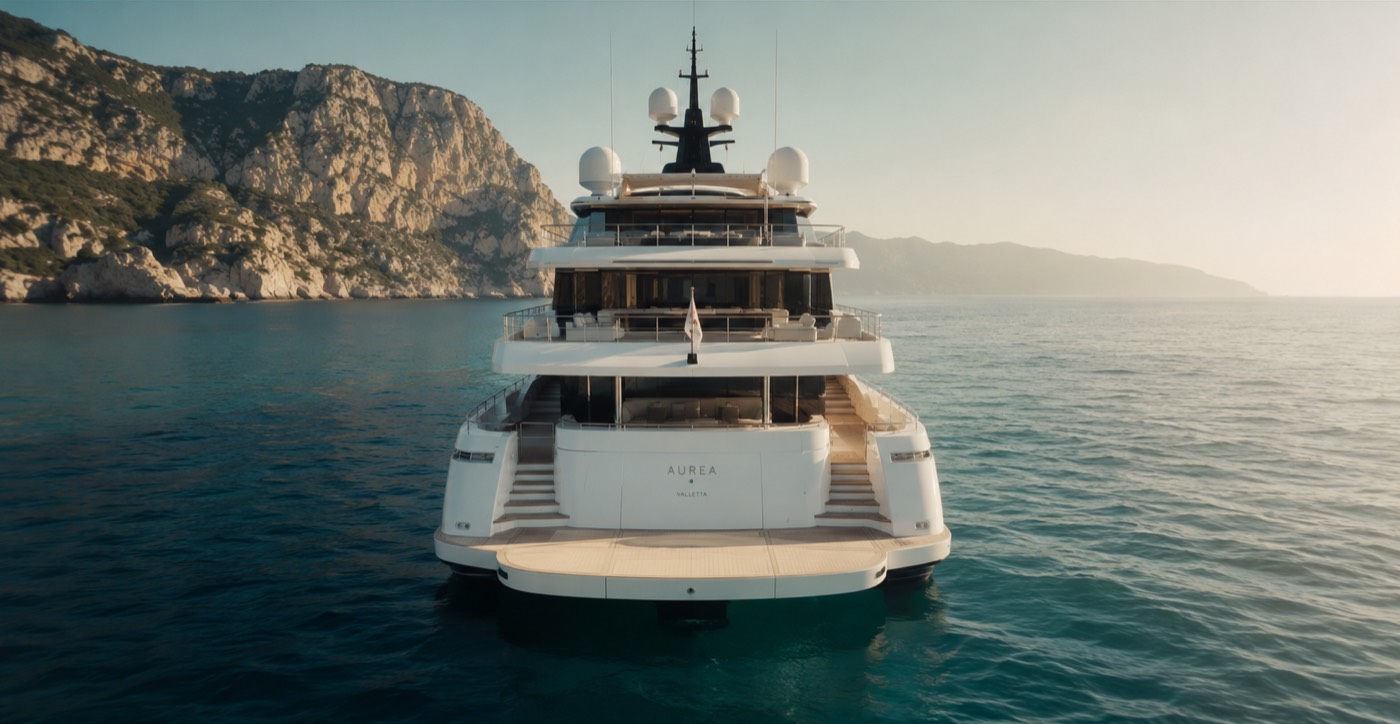
For decades, the divide was clear: hotels lived on land, yachts lived at sea, and never the twain shall meet. That division is over.
In 2022, The Ritz-Carlton launched Evrima — not a cruise ship, but a 149-guest superyacht purpose-built to deliver the Ritz-Carlton experience on open water. By 2025, it had two sister vessels: Ilma and Luminara. Four Seasons Yachts launched its first vessel in early 2026, with entry suites at 473 square feet — 58% larger than Ritz-Carlton's — and a flagship suite spanning four decks and nearly 10,000 square feet. Aman is building Amangati for a 2027 Mediterranean debut: 47 suites, around 94 guests, starting from $7,000 per suite per night. Orient Express is building the Silenseas, the world's largest luxury sailing yacht, as a floating extension of its land-based legacy.
These are not cruise lines with upgraded bedding. These are hotel brands — with decades of accumulated brand equity, loyalty programmes, and trained guest expectations — transplanting their entire hospitality philosophy onto water.
Notably, 75% of Ritz-Carlton Yacht guests are first-time cruisers. They are not defecting from traditional cruising. They are hotel guests following their brand to a new setting.
This changes everything about what happens onboard
Hotel guests carry expectations trained by years of five-star land experiences. They expect to unwrap something considered in the bathroom. They expect the scent of the soap to feel intentional. They expect the shampoo not to be a generic bottle with a logo applied to it. The amenity tray is not a detail — it is a first impression that repeats itself every morning of a voyage.
On land, the luxury hotel industry understood this decades ago. Bulgari supplies BVLGARI Hotels. Hermès supplies its eponymous properties. Aesop built an entire brand on hotel placement. The connection between five-star hotels and bespoke amenity partners is so well established it is invisible.
At sea, this pipeline does not yet exist in the same way.
The yachting world has historically sourced amenities from marine suppliers optimised for practicality and compliance — not from partners who think in terms of guest memory, sensory identity, or brand extension. As hotel groups move onto water with the same standards they hold on land, they are discovering that the supply chain has not followed them.
The gap is not in the vessel design
Ritz-Carlton and Four Seasons have spent hundreds of millions ensuring the hardware is flawless. The gap is in the finishing layer — the layer that tells a guest, the moment they open the bathroom cabinet, that they are somewhere that was designed for them.
The best boutique hotels have long understood that a bespoke amenity line is not a cost. It is an asset. A signature scent becomes a memory trigger. A carefully sourced formula becomes a talking point. Guests ask where the products come from. Some take them home. Some look for them again.
This logic applies even more powerfully at sea, where guests are enclosed in a vessel for days, where every sensory touchpoint is amplified by the intimacy of the space, and where there is no city outside to distract from the quality of what surrounds them.
What the yacht market has not yet built
The private and charter yacht sector serves some of the most demanding guests in travel. It has invested heavily in design, cuisine, and crew training. But the amenity layer — the formulation, the packaging, the sensory coherence between what guests encounter on deck, at the spa table, and in their cabin — has not kept pace.
There are three reasons for this:
Supply chain inertia. The majority of yacht amenity suppliers entered the market from the marine hardware side, not the luxury cosmetics side. Their defaults are practical: stable product, safe packaging, easy reorder. They were not built to ask what a yacht's scent identity should be.
Compliance pressure without a framework. The EU PPWR regulation coming into force in August 2026 bans single-use plastic amenities across hospitality — including vessels. The Balearic Law 8/2019 has already been in force for years. Most charter operators are not compliant and are not aware. A compliant refillable programme with full CPNP documentation is now a legal requirement, not a differentiator.
No one positioned for both worlds. The hotel amenity industry knows how to build brand. The yacht supply chain knows how to operate at sea. Very few suppliers have built a programme that does both — custom formulations developed to perform in a marine environment, packaged to meet charter operational requirements, and documented to satisfy EU regulatory audit.
The moment the industry is in now
The brands leading this charge — Ritz-Carlton, Four Seasons, Aman — did not build their reputations by outsourcing their identity. They will not do so on water either. The question is which amenity partners will be ready to think at that level: bespoke formulations, responsible sourcing, packaging designed for a vessel environment, and the ability to speak the language of hospitality, not just cosmetics manufacturing.
The hotel standard has gone to sea. The amenity industry needs to catch up.
SOSOO Amenities develops bespoke onboard amenity programmes for superyachts and luxury hospitality properties — combining European design standards with high-performance formulations developed for the modern guest experience. Speak with us about building a programme for your vessel or property.
Get in touch
cs@sosooamenities.com →